
Carbon Dioxide Experiments
- sciencewithdianneislandba
- Apr 11, 2020
- 7 min read
Updated: May 7, 2020
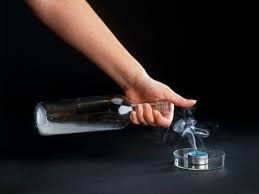
Carbon dioxide is a colourless, odourless gas. It’s what makes soft drinks fizzy and makes up the air you breathe out. While it is a necessary greenhouse gas that keeps the Earth’s oceans from freezing solid, increasing levels of CO2 contribute to global warming, making it a gas worth studying. Simple carbon dioxide experiments will demonstrate to students the scientific method while also teaching principles of chemistry, physics and other areas of science.
Enjoy fun science experiments for kids that feature awesome hands-on projects and activities that help bring the exciting world of science to life.
NOTE: All children will require some parent help and supervision to carry out these experiments.
1.). Bath Bombs

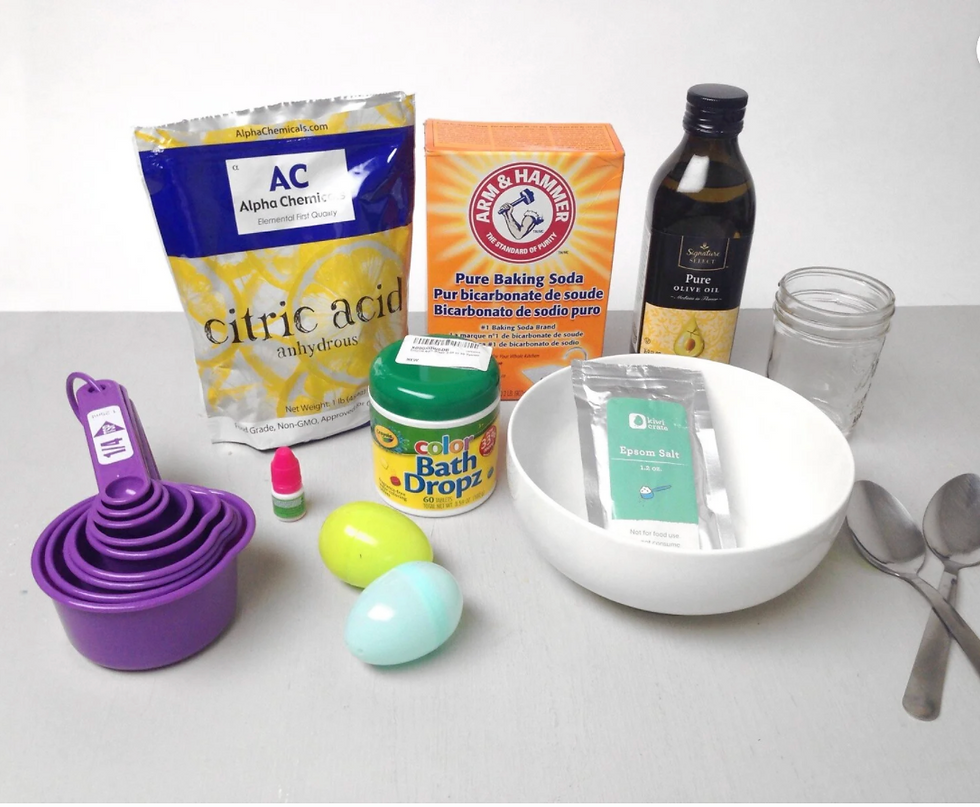
What you'll need
baking soda
epson salt
citric acid
bath colouring tablets (optional)
olive oil
scented oils (optional)
moulds - for baking, or plastic easter eggs
mixing bowl
bowl
spoons (2)
cup
In the mixing bowl, combine all your dry ingredients. You'll need 1 cup of baking soda, 1/2 cup of epsom salt, and 1/2 cup of citric acid.
Also add a little colour to your bath bombs by crushing up some bath colouring tablets and adding them to the mixture.
In a cup, combine the liquid ingredients. You'll need 1 tablespoon of water and 3 teaspoons of olive oil.
Tip:To make them smell good, you can add about 2 tablespoons of scented oils now, too. I did, and now it smelled like jasmine while I made my homemade bath bombs.
Quickly pour the liquid into the bowl and mix everything together! It will start to fizz a little, and that's all right. That's the chemical reaction happening. But, we don't want it to all fizz away yet, so keep stirring until it's well mixed.
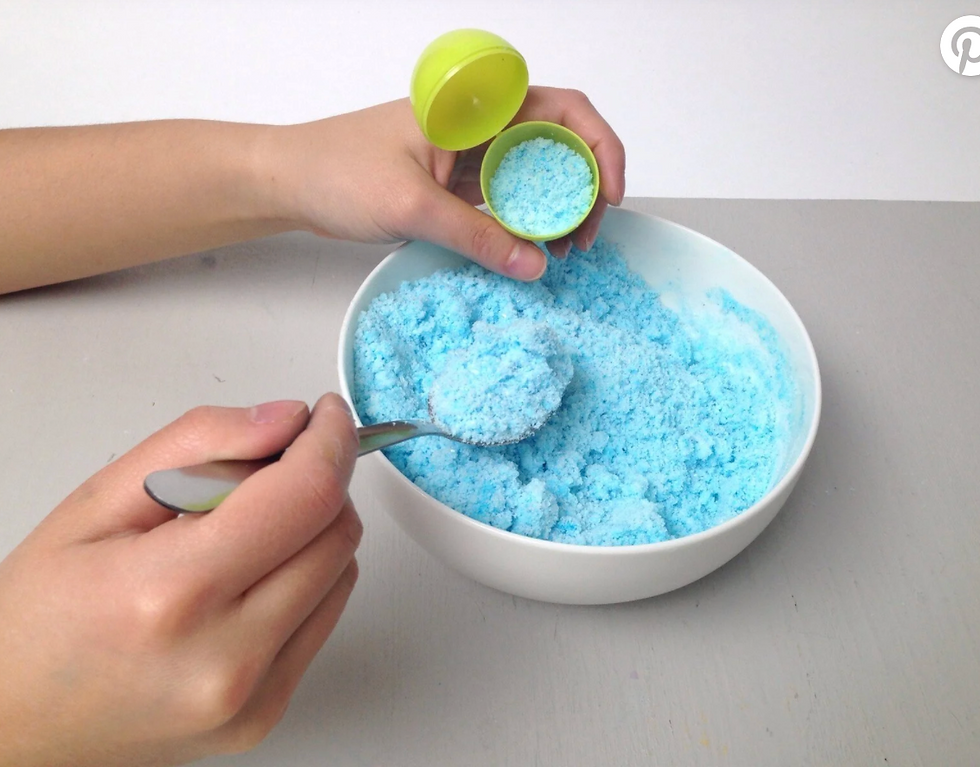
Scoop some of the bath bomb mixture into one of your moulds. For a mould, you can use a muffin tin, silicone baking moulds, or even plastic Easter eggs.
Press the bath bomb mixture into the mould, packing it tightly.
Tip:If your mixture starts to dry out while you are packing it all into mould, stir in a few drops of olive oil.
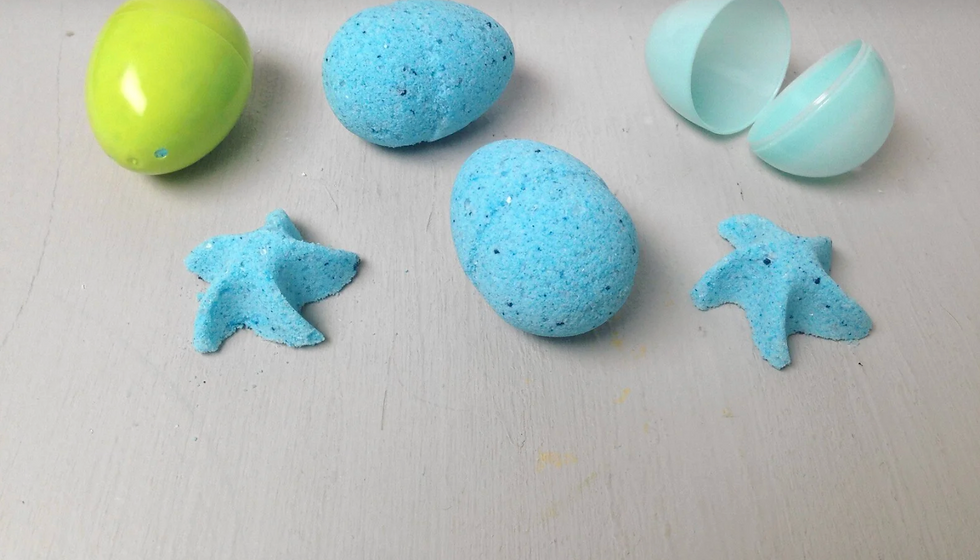
Let your shapes dry for 4-6 hours, and then, carefully pop them out.
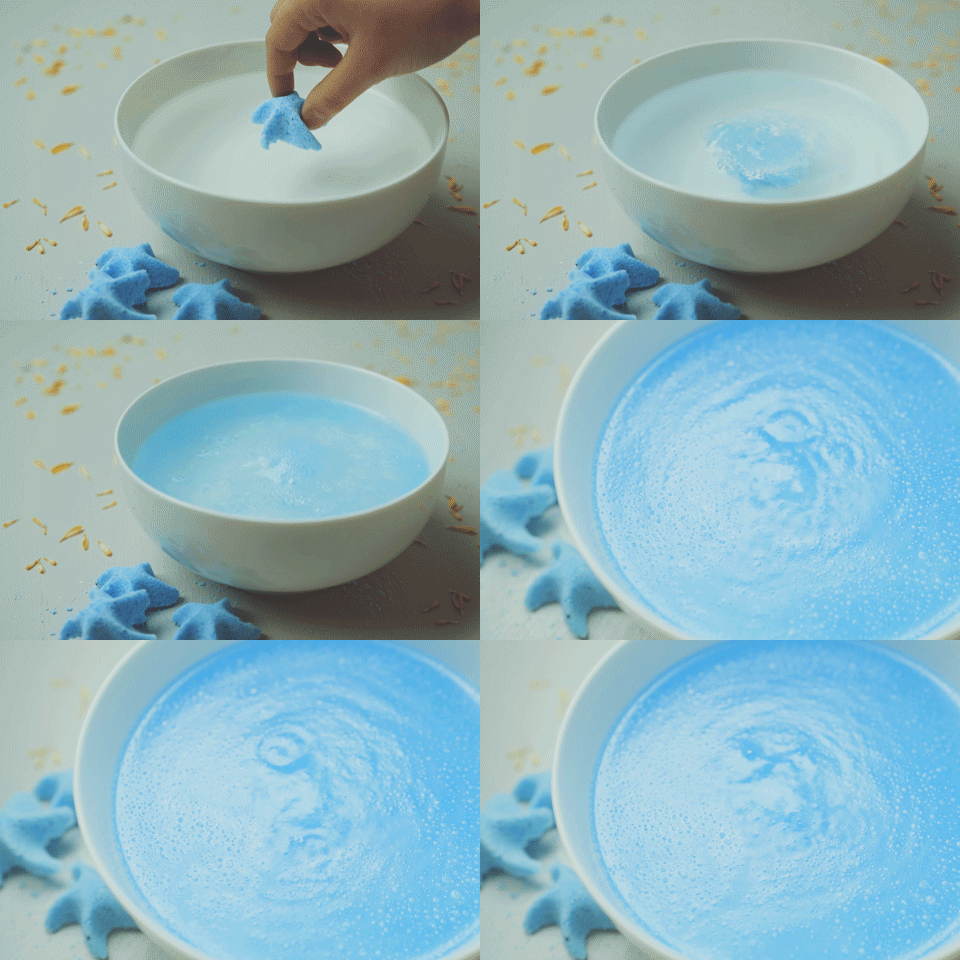
Now you are ready to package them up as a gift or use them the next time you take a bath. When you do drop them in the water, get ready to watch them fizz and dissolve into the bath water, making it feel -- and smell -- really nice.
What's happening?
It's a few ingredients in our bath bombs that create the fizzy reaction: baking soda, citric acid and the bath water. When the two dry ingredients, baking soda and citric acid, hit the bath water, they react and create carbon dioxide bubbles. The bigger your bath bomb, the longer this reaction will last.
2. Bubble Bombs
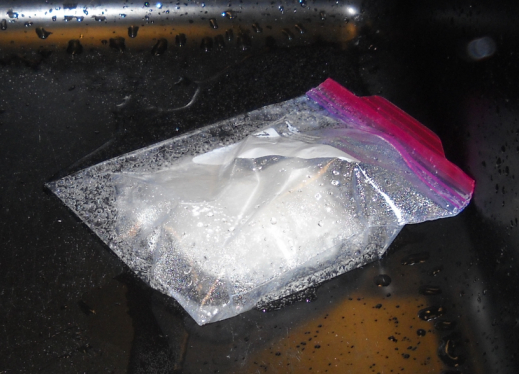
Using vinegar and baking soda you can pop a plastic bag with the power of fizz.
What you'll need
water
measuring cup
zipper-lock plastic sandwich bags
paper towel
tablespoon baking soda
vinegar
Figure out where you want to explode your Bubble Bomb. Sometimes the bags make a mess when they pop, so you may want to experiment outside. If it's a rainy day, you can explode your Bubble Bombs in the bathtub or sink.
It's very important to use a bag without holes. To test the zipper-lock bag, put about half a cup of water into it. Zip it closed and turn it upside down. If no water leaks out, you can use that bag. Unzip it and pour out the water. If the bag leaks, try another one. Keep testing bags until you find one that doesn't leak.
Tear a paper towel into a square that measures about 5 inches by 5 inches. Put 1 1/2 tablespoons of baking soda in the centre of the square, then fold the square as shown in the picture, with the baking soda inside. This is your "time-release packet."
Pour into your plastic bag:
1/2 cup of vinegar
1/4 cup of warm water
Now here's the tricky part. You need to drop the time-release packet into the vinegar and zip the bag closed before the fizzing gets out of control.
You can zip the bag halfway closed, then stuff the packet in and zip the bag closed the rest of the way in a hurry. Or you can put the time-release packet into the mouth of the bag and hold it up out of the vinegar by pinching the sides of the bag. Zip the bag closed and then let the packet drop into the vinegar.
One way or another, get the packet in the vinegar and zip the bag closed.
Shake the bag a little, put it in the sink or on the ground, and stand back! The bag will puff up dramatically and pop with a bang.

Why does the Bubble Bomb explode?
The bubbles in the Bubble Bomb are filled with carbon dioxide, a gas that forms when the vinegar (an acid) reacts with the baking soda (a base).
3.) Blowing Up Balloons With CO2
Chemical reactions make for some great experiments. Make use of the carbon dioxide given off by a baking soda and lemon juice reaction by funnelling the gas through a soft drink bottle and in to your awaiting balloon!
What you'll need
Balloon
About 40 ml of water (a cup is about 250 ml so you don't need much)
Soft drink bottle
Drinking straw
Juice from a lemon
1 teaspoon of baking soda
Instructions
Before you begin, make sure that you stretch out the balloon to make it as easy as possible to inflate.
Pour the 40 ml of water into the soft drink bottle.
Add the teaspoon of baking soda and stir it around with the straw until it has dissolved.
Pour the lemon juice in and quickly put the stretched balloon over the mouth of the bottle.
What's happening?
If all goes well then your balloon should inflate! Adding the lemon juice to the baking soda creates a chemical reaction. The baking soda is a base, while the lemon juice is an acid, when the two combine they create carbon dioxide (CO2). The gas rises up and escapes through the soft drink bottle, it doesn't however escape the balloon, pushing it outwards and blowing it up. If you don't have any lemons then you can substitute the lemon juice for vinegar.
4.) Coke and Mentos Rocket
NOTE: This experiment requires parental supervision at all stages for all ages.
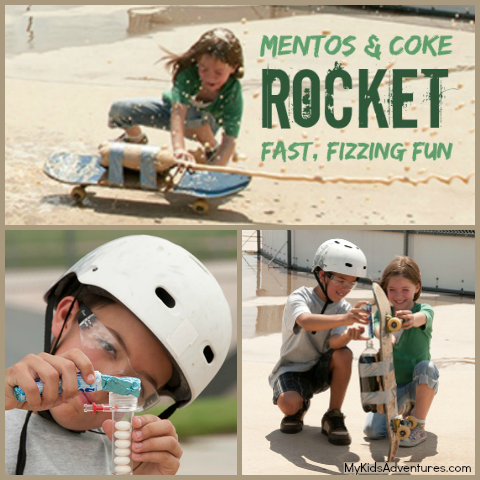
This experiment unleashes the power of candy and soda to propel a rocket car.
Rocket propulsion works because of pressurized gas. When the gas escapes the rocket (going down), it pushes the rocket up. If we turn the rocket on its side, the gas will push behind the rocket to propel it forward. Put some wheels beneath it and you have a rocket car! We can use a variety of methods to create pressurized gas, the following activity uses Mentos and Diet Coke.
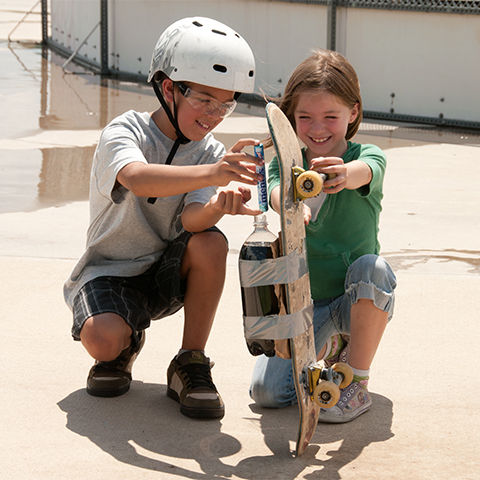
Mentos and soda “Rocket Fuel”
Soda is fizzy because it contains molecules of carbon dioxide (CO2). When it’s poured into a glass, the carbon dioxide molecules separate from the water by forming bubbles—a process called nucleation—and escaping into the air. After a while, the soda will go flat, but this process takes some time and isn’t powerful enough to propel our rocket car. By adding Mentos candy to the soda, we can speed up the nucleation process to cause a geyser powerful enough to spray high into the air or, in this case, move a rocket car. Gum arabic on the Mentos’ surface breaks up the surface tension of the water in the pop. The surface of Mentos is rough and filled with tiny dimples and holes that are great spots for nucleation because of how they increase the surface area available for reaction. When Mentos and soda come into contact, lots of CO2 bubbles form very quickly and cause a "geyser"-like eruption. Although any carbonated beverage will produce a similar effect, we recommend aspartame diet beverages for two reasons:
Aspartame, the artificial sweetener , speeds up the reaction even more because water with aspartame in it has a lower surface tension than sugary water (this allows the bubbles to escape more easily)
It’s much less sticky to clean up!
Objectives
Explore and demonstrate the effects of action and reaction forces.
What you'll need
1.) An outdoor space (e.g. playground or yard) 2.) 2L of diet Coke (room temperature) 3.) An old skateboard or piece of wood and four wheels 4.) Duct tape 5.) Masking tape 6.) 5 Mentos candies 7.) hammer
8.) Per person: safety goggles
Key Questions
What is making the rocket move forward?
How could we make the rocket move faster?
Instructions
Wear safety glasses, conduct in a wide open space.
1.) Using duct tape, tape the bottle onto a skateboard (or similar) so that the cap overhangs the end of the skateboard.
2.) Tear off a 20cm strip of masking tape.
3.) Stack 5 Mentos candies on the sticky side of the masking tape and wrap the tape lengthwise around the candies to create a package. The sides of the candies should be exposed.
4.) Remove bottle cap and use double sided tape to secure mentos package to the inside of cap. When you replace cap you don’t want the mentos to touch the coke before securing the lid so you may need to pour out a small amount.
5.) Replace cap tightly.
6.) Shake the bottle to build up even higher pressure inside. The bottle will feel very firm.
7.) Standing to the side of the skateboard, strike the bottle cap with the hammer (to disrupt the threads). The pressure inside the bottle should be enough to blow the cap off and propel the skateboard in the opposite direction.
Adult Note: Warm diet coke works best
Extensions
Experiment with different kinds of candy and pop. Which combinations work the best? Which combinations don’t work as well?
Experiment with different ways to introduce the candy and seal the bottle.
5.). Hockey Pockey Science
Make hockey hockey with your parents following the recipe below.

How are the Bubbles formed in Hockey Pockey?
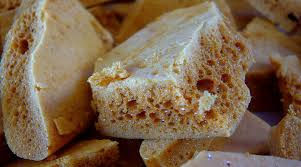
What you'll need
5 Tbsp Chelsea White Sugar
2 Tbsp Chelsea Golden Syrup
1 tsp baking soda
Method
1.) Put sugar and golden syrup into a saucepan.
2.) Heat gently, stirring constantly until Chelsea sugar dissolves.
3.) Increase the heat and bring to the boil. Boil for two minutes.
4.) Stir occasionally, if necessary, to prevent burning.
5.) Add baking soda.
6.) Stir quickly until mixture froths up rapidly!
7.) Remove from heat.
8.) Pour into a buttered tin immediately. Leave until cold and hard then break into pieces.
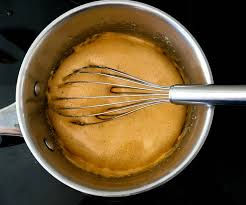
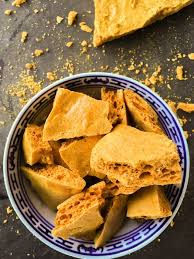
Watch very carefully to what happens to the mixture when you add baking soda. A chemical reaction happened when the baking soda was added to the mixture. Record carefully what you saw.
What do you think happened and why did it happen? WRITE DOWN YOUR IDEAS.


Comments